

In the bustling digital landscape, your website isn’t just a digital brochure; it’s your most powerful sales tool. But simply having an online presence isn’t enough. To truly succeed, you need a high-converting website – one that consistently transforms visitors into leads, customers, or subscribers.
Many businesses invest heavily in traffic generation, only to see their efforts wasted on sites that fail to engage or guide users effectively. This leads to missed opportunities, frustrated visitors, and ultimately, stagnant growth. Understanding how to build a website that converts is crucial for maximizing your ROI and achieving your business objectives.
Quick answer: A high-converting website is meticulously designed with a clear user journey, compelling content, strong calls-to-action, and optimized performance. It focuses on solving user problems and building trust, ensuring visitors take desired actions like making a purchase or filling out a form.
This guide will walk you through the essential strategies, design principles, and technical considerations for creating a website that not only attracts attention but also drives tangible results. From understanding your audience to leveraging powerful calls-to-action, we’ll cover everything you need to know to elevate your online presence and turn clicks into conversions.
Ready to Transform Your Website into a Lead Generation Machine?
Let’s discuss how Purple Rocket can help you achieve exceptional conversion rates.
Why a High-Converting Website Matters for Your Business
In today’s competitive digital landscape, a website that merely exists isn’t enough. A high-converting website is an indispensable asset that directly impacts your business’s bottom line and growth trajectory. It’s about getting more value from every visitor.
Imagine doubling your website’s conversion rate without increasing your traffic. That means twice as many leads, twice as many sales, and a significantly higher ROI on your marketing spend. This is the power of conversion rate optimization (CRO).
Key Elements of a High-Converting Website
- ✅ Clear Value Proposition: Visitors need to understand immediately what you offer and why it matters to them.
- ✅ Intuitive User Experience (UX): Easy navigation, logical flow, and accessibility ensure a smooth journey.
- ✅ Compelling Content: Engaging copy, high-quality visuals, and persuasive messaging that addresses pain points.
- ✅ Strong Calls-to-Action (CTAs): Clear, prominent, and benefit-driven buttons or links.
- ✅ Trust and Credibility: Testimonials, reviews, security badges, and professional design build confidence.
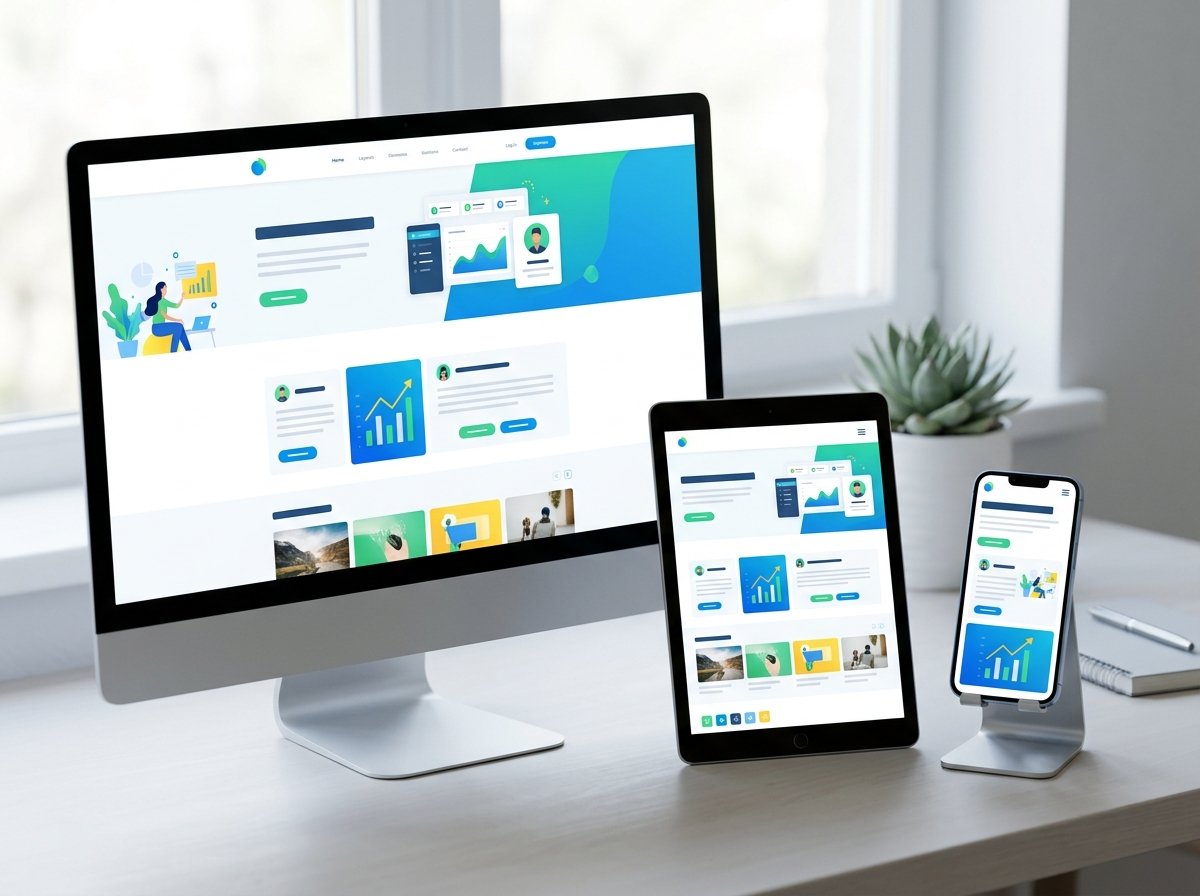
- ✅ Mobile Responsiveness: A flawless experience across all devices is non-negotiable.
- ✅ Fast Loading Speed: Page speed is a critical factor for user retention and SEO.
Benefits of a Conversion-Focused Website
Investing in website conversion optimization yields significant advantages that extend far beyond a single transaction. It’s about building a sustainable foundation for digital marketing success.
✔ Higher ROI on Marketing
Every marketing dollar spent brings more leads and sales, maximizing your ad budget effectiveness.
✔ Improved Customer Experience
A well-designed, intuitive site makes it easy for visitors to find what they need, leading to greater satisfaction.
✔ Enhanced Brand Credibility
Professional design and seamless functionality signal trustworthiness and expertise to your audience.
✔ Better SEO Rankings
Google rewards sites with good user experience, leading to improved visibility in search results.
✔ Deeper Customer Insights
Analytics from conversion-focused efforts provide valuable data on user behavior and preferences.

Step-by-Step Guide to Building Your High-Converting Website
Building a website that consistently converts isn’t a single task, but a strategic process. Follow these steps to lay a strong foundation and continuously improve your conversion rates.
Step 1: Define Your Audience and Conversion Goals
Before you even think about design or content, understand who you’re speaking to. Create detailed buyer personas: demographics, psychographics, pain points, and motivations. Simultaneously, clearly define what a “conversion” means for each page or section of your site. Is it a purchase, a form submission, a download, or a phone call?
Knowing your audience helps tailor every element, and specific goals provide measurable targets for your efforts.
Step 2: Craft a Seamless User Experience (UX)
UX is at the heart of conversion. Your site needs to be intuitive, easy to navigate, and visually appealing. This includes a clear site structure, responsive design for mobile devices, and fast loading times. Think about the user journey: from landing on your page to completing a conversion, how can you make that path as smooth and logical as possible?
Prioritize mobile responsiveness; a significant portion of traffic comes from smartphones.
💡 Pro Tip: Conduct user testing with real people, even if it’s just a few friends or colleagues who fit your target demographic. Their fresh perspective can uncover navigation or clarity issues you might miss.
Step 3: Create Persuasive Content and Visuals
Content is where you communicate your value. Use concise, benefit-driven headlines, engaging body copy, and high-quality images or videos. Focus on addressing your audience’s pain points and demonstrating how your solution provides value. Each piece of content should lead the user towards the next logical step in their conversion journey.
Don’t forget the power of social proof: testimonials, case studies, and trust badges significantly boost credibility.
Common Mistakes That Kill Conversions
Even with the best intentions, businesses often fall into traps that hinder their website’s ability to convert. Being aware of these common pitfalls can help you steer clear of them.
⚠️ Avoid this: Ambiguous Call-to-Actions (CTAs). If your visitors don’t know what to do next, they won’t do anything. Avoid generic phrases like “Click Here”; instead, use action-oriented and benefit-driven language like “Get Your Free Quote” or “Download the Guide Now.”
- ❌ Overwhelming Design: Too many elements, flashing banners, or cluttered layouts distract users and make your site hard to process. Simplicity and clarity are key.
- ❌ Slow Page Load Times: Every second counts. Users expect fast loading pages, especially on mobile. Slow sites lead to high bounce rates and poor SEO.
- ❌ Lack of Mobile Optimization: A desktop-only site is a conversion killer. Ensure your website adapts perfectly to all screen sizes.
- ❌ No Clear Value Proposition: If visitors can’t quickly grasp what your business offers and why they should care, they will leave.
- ❌ Neglecting Analytics: Without tracking user behavior and conversion data, you’re guessing. Data-driven decisions are essential for continuous improvement.
Optimizing for User Experience (UX) and Technical SEO
A high-converting website goes hand-in-hand with an exceptional user experience and robust technical SEO. These elements not only satisfy your visitors but also signal to search engines that your site is valuable and trustworthy.
Prioritize Page Speed
Slow websites frustrate users and negatively impact search engine rankings. Optimize images, leverage browser caching, minimize CSS/JavaScript, and consider a Content Delivery Network (CDN).
Ensure Mobile Responsiveness
Google prioritizes mobile-first indexing. Your site must look and function perfectly on all devices, providing an optimal viewing experience regardless of screen size. This includes legible text, tap-friendly buttons, and easy navigation.
💡 Pro Tip: Use tools like Google PageSpeed Insights and Lighthouse to regularly audit your website’s performance, accessibility, and SEO. Address any flagged issues promptly to maintain a high-performing site.
Implement Clear Navigation
A logical and consistent navigation menu helps users find what they’re looking for without effort. Use descriptive labels for menu items and avoid excessive dropdowns.
Analytics and Continuous Improvement
Building a high-converting website isn’t a one-time project; it’s an ongoing process of analysis, testing, and refinement. Leverage data to understand user behavior and identify areas for improvement.
Key Metrics to Track:
- Conversion Rate: The percentage of visitors who complete a desired action.
- Bounce Rate: The percentage of visitors who leave your site after viewing only one page.
- Time on Page: How long users spend on a specific page.
- Exit Pages: The last pages visitors view before leaving your website.
- Traffic Sources: Where your visitors are coming from.
Need Expert Guidance to Analyze Your Website Performance?
Our digital marketing specialists can help you decipher data and implement winning strategies.
A/B Testing and Iteration
Don’t guess; test! A/B testing allows you to compare different versions of a page or element (e.g., CTA button color, headline, form layout) to see which performs better. This data-driven approach removes subjectivity and helps you make informed decisions that directly impact your conversion rates.
Examples of Effective Website Design for Conversions
Let’s look at how certain design choices can impact user action:
Common Questions About Website Conversions
Here are answers to frequently asked questions about improving website conversion rates.
What is a good conversion rate?
A good conversion rate varies significantly by industry, type of website, and specific conversion goal. Generally, anything from 2% to 5% is considered a decent starting point, but top performers can achieve 10% or higher. The most important thing is to consistently improve upon your own baseline.
How long does it take to see results from CRO?
CRO is an ongoing process, but you can often see initial improvements within weeks or a few months, especially with impactful changes like clear CTAs, improved headlines, or streamlined forms. Significant, sustained growth is built over time through continuous testing and optimization.
Is web design important for conversions?
Absolutely. Web design plays a critical role. A clean, professional, and intuitive design builds trust, enhances readability, and guides visitors smoothly through your site. A cluttered or outdated design can quickly deter potential customers.
What is a Call-to-Action (CTA) and why is it important?
A CTA is a prompt on your website that tells users what action to take next (e.g., “Buy Now,” “Sign Up,” “Learn More”). It’s crucial because it provides clear guidance and converts interest into action, directly impacting your conversion rates.
How does content affect conversion rates?
High-quality, relevant, and persuasive content is essential. It educates, engages, and convinces visitors of your value. Content that clearly addresses customer needs, highlights benefits, and builds trust directly influences their decision to convert.

Is Your Website Underperforming? Let’s Fix It Together.
Get personalized strategies for technical SEO, conversion copywriting, and AI automation to boost your leads.
Conclusion: Your Website as a Strategic Growth Engine
Building a high-converting website is not just about aesthetics; it’s a strategic imperative for any business aiming for sustainable digital growth. By focusing on your audience, optimizing the user experience, crafting persuasive content, and leveraging data-driven insights, you can transform your website from a passive online presence into an active, powerful engine for leads and sales.
Remember, conversion rate optimization is an ongoing journey, not a destination. Consistent testing, analysis, and refinement are key to staying ahead in the ever-evolving digital landscape. Embrace a conversion-focused mindset, and watch your online presence deliver remarkable results for your business.
Unlock Your Website’s Full Conversion Potential!
Purple Rocket specializes in crafting high-performing websites that attract, engage, and convert your ideal customers.